

The application fields of steel structures are very extensive, mainly including the following aspects:
① Industrial plants and warehouses
Steel structures are widely used in industrial plants, workshops, warehouses and other building types, especially suitable for the needs of large-span, large space and heavy load.
② Commercial buildings
Commercial buildings are mostly high-rise buildings, and the use of steel structure technology can significantly reduce building weight, improve earthquake resistance, wind resistance, and other capabilities, while achieving rapid construction and increased utilization of building space.
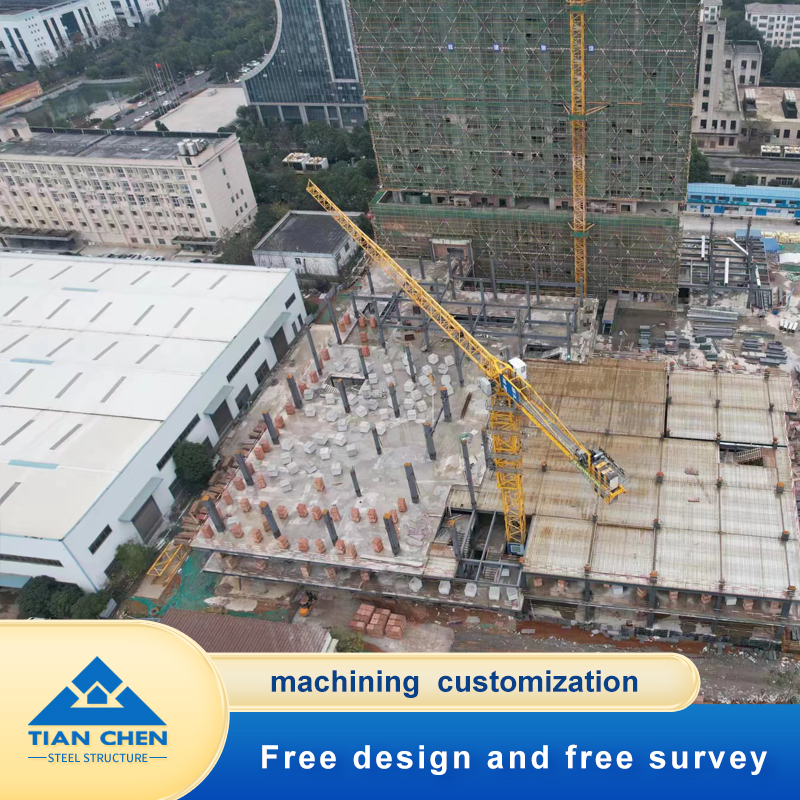
③ Residential buildings
Steel structure technology is also widely used in the field of residential construction, especially in high-rise residential buildings and other structures. The lightweight and high-strength characteristics of steel structures can reduce the self weight of buildings, increase space utilization, and improve the seismic performance of buildings.
④ Cultural architecture
The application of steel structure technology in the field of cultural architecture is becoming increasingly widespread, such as steel structure bridges, steel structure sculptures, steel structure sports halls, etc., which can achieve complex spatial design and fully demonstrate architectural aesthetics and creativity.
⑤ Bridges and airports
Steel structures can provide better span and load capacity, making them suitable for large infrastructure such as bridges and airports.
⑥ Temporary and Removable Buildings
The advantages of steel structures make them suitable for various temporary and removable buildings, such as temporary exhibition halls, exhibition halls, on-site construction sites, concrete formwork, etc.
Overall, the application fields of steel structures are very extensive, with advantages such as lightweight, environmental protection, and fast construction, which can meet the building needs of different fields. At the same time, the design and construction of steel structures need to comply with relevant specifications and standards to ensure their safety, stability, and durability.